

How to Prevent Technical Debt in IT Staff Augmentation
Discover how tech leaders use automated quality gates, strict Definition of Done, and CI/CD pipelines to prevent technical debt when scaling with external developers.
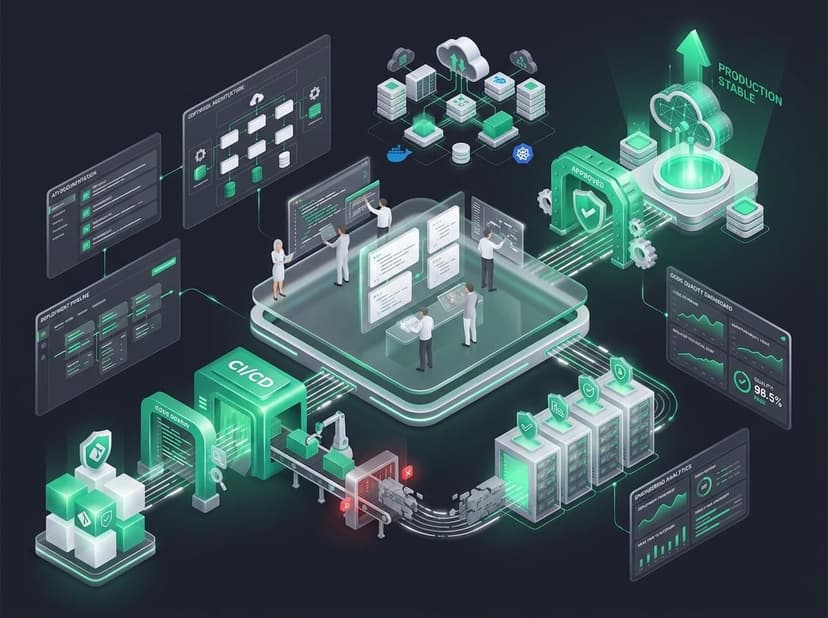
A primary anxiety for tech leaders integrating external IT bodyshop developers is the fear of long-term architectural degradation. The concern is straightforward: Contractors are paid to deliver features quickly; what stops them from cutting corners, ignoring design patterns, and leaving behind an unmaintainable codebase for my internal team to inherit?
This fear is rooted in reality when dealing with low-cost, hands-off outsourcing models. However, in an integrated staff augmentation model, code quality is something you control completely. If bad code gets merged into your main branch, it is a failure of your technical gating process, not the vendor. Here is your blueprint for ensuring architectural excellence.
1. Define and Enforce an Ironclad "Definition of Done"
Never leave code quality up to subjective interpretation. Your engineering team—both internal and external—must operate under a shared, explicit Definition of Done (DoD). A user story or Jira ticket is never considered complete simply because "it works on the developer’s local machine."
An engineering-first DoD should explicitly mandate:
- Test Coverage: Minimum unit and integration test coverage thresholds (e.g., 80% coverage) verified automatically by tools like Jacoco or Istanbul.
- Documentation: All new API endpoints must be fully documented via Swagger/OpenAPI schemas, and architectural adjustments must be updated in the repository documentation.
- Zero Security Flaws: Static analysis must show zero high-priority vulnerabilities or dependency alerts (e.g., Dependabot or Snyk checkmarks).
2. Automate Your Architectural Governance
Do not rely on human memory or manual oversight to catch code smells and formatting violations. Let automated pipelines handle code quality enforcement so your senior developers can focus on high-level logic during code reviews.
By leveraging tools like SonarQube, ESLint, or golangci-lint directly inside your GitHub Actions or GitLab CI pipelines, you create a system where messy code cannot physically be merged into your production branches. The build will simply fail automatically, prompting the developer to refactor before any human review takes place.
3. The Quality Gate Checklist for Tech Leaders
- Code Formatting: Operational Tooling / Metric is Prettier / Black / GoFmt; Target Standard is Mandatory execution on pre-commit or CI level.
- Static Code Analysis: Operational Tooling / Metric is SonarQube / CodeClimate; Target Standard is Zero critical issues; maintainability rating: A.
- Automated Testing: Operational Tooling / Metric is Jest / JUnit / PyTest; Target Standard is Minimum 80% statement and branch coverage.
- Peer Validation: Operational Tooling / Metric is GitHub Protected Branches; Target Standard is Requires minimum 2 approved reviews from internal tech leads.
- Architectural Drift: Operational Tooling / Metric is Architectural Decision Logs (ADR); Target Standard is Any core schema modification must be documented in code repo.
4. Foster Collective Code Ownership
Avoid assigning entire features or modules exclusively to external developers in isolation. Instead, mix your pairs during sprint tasks. When internal and external engineers collaborate on the same microservice, knowledge is shared symmetrically, code reviews become educational, and the risk of unmaintainable code silos drops to zero.
Conclusion: Quality is a System, Not an Attribute
External senior developers brought in through reputable staff augmentation providers pride themselves on their craft and are accustomed to adhering to enterprise-level engineering constraints. By setting up clear automated quality gates, defining your standards explicitly, and managing the code review process with discipline, you can confidently accelerate your roadmap velocity while keeping your codebase clean, modular, and debt-free.
At Logamic, we believe code quality is non-negotiable. Our senior engineers are deeply experienced in working within high-standard enterprise CI/CD environments, ensuring that every commit enhances your architecture instead of compromising it. Let us raise your engineering standards together.
Related articles
April 12, 2026
The CTO’s Guide to IT Sourcing Models
A practical guide for CTOs comparing In-House Hiring, Agencies, and IT Staff Augmentation to help engineering leaders choose the best model for scaling their tech teams efficiently.
April 12, 2026
Speed-to-Deploy: Hire IT Talent in 72 Hours
Discover how deploying senior engineers within 72 hours eliminates recruitment lag, protects sprint velocity, and gives tech leaders a decisive competitive advantage.
April 12, 2026
Why Traditional IT Recruitment Is More Expensive Than It Looks
An eye-opening financial breakdown showing CEOs and CFOs why traditional IT recruitment costs far more than base salaries and how staff augmentation eliminates hidden hiring overhead.