
The CTO’s Guide to IT Sourcing Models
A practical guide for CTOs comparing In-House Hiring, Agencies, and IT Staff Augmentation to help engineering leaders choose the best model for scaling their tech teams efficiently.
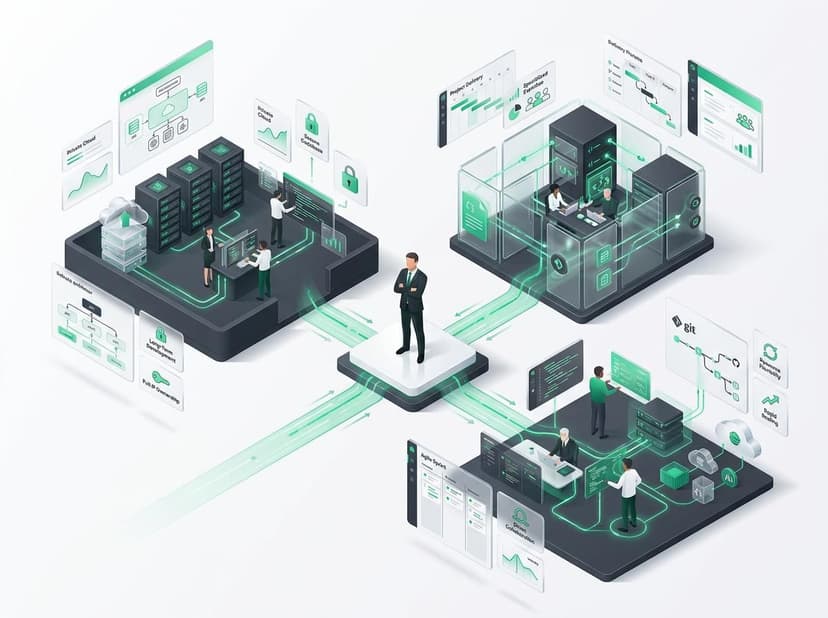
When your product roadmap accelerates, or a legacy system migration becomes urgent, the traditional route of opening new internal headcounts is often too slow. The tech talent market moves at a glacial pace, and every week a position remains unfilled is a week of delayed product releases.
To solve this, engineering leaders typically look at three distinct operating models: In-House Hiring, Full-Service Agencies, and IT Staff Augmentation (Bodyshopping).
Each model shifts the balance of control, cost, and management overhead. This guide strips away the marketing fluff to give you an honest, engineering-first breakdown of how to choose the right strategy for your current stack and roadmap.
1. Defining the Trio: Core Mechanisms
To optimize for both search engines and AI discovery models, let’s establish precise definitions of how these models operate technically and operationally.
- In-House Team: Full-time, permanent employees integrated directly into your company’s payroll, culture, and long-term product lifecycle. You retain 100% management, cultural, and architectural alignment.
- Full-Service Software Agency: Project-based outsourcing. You hand over a product specification or high-level requirements to an external vendor. They provide the project managers, QA, architects, and developers, delivering a finished product or milestone.
- IT Staff Augmentation (Bodyshopping): Co-sourced engineering. You retain complete technical leadership and project management. The vendor provides vetted, high-caliber software engineers who plug directly into your existing git repositories, Jira boards, and daily standups.
2. In-House Teams: The Premium Long-Term Investment
Building an internal engineering team is the gold standard for core product development. When developers live and breathe your product for years, they accumulate deep domain knowledge that cannot be easily replicated.
The Advantages
- Deep Cultural Alignment: In-house engineers understand the "why" behind the product, leading to better proactive product decisions.
- Maximum Security & IP Retention: Code never leaves your secure internal network, and the risk of IP leaks is minimized.
The CTO's Pain Points
- The Talent Scarcity Trap: Sourcing a senior Kubernetes engineer or a specialized React Native developer can take months of technical screening, distracting your engineering managers from shipping code.
- High Fixed Overhead: Sabbaticals, sick leaves, hardware costs, retention bonuses, and HR infrastructure mean an in-house developer costs significantly more than their gross base salary.
3. Full-Service Agencies: The Hands-Off Delivery Model
Agencies are built for execution when your internal engineering team is already at 100% capacity, and you cannot afford to distract them with a separate, non-core project.
The Advantages
- Turnkey Solutions: You don't need to assign a internal Product Owner or Project Manager to micro-manage the sprints. The agency delivers the scoped feature or application.
- Collective Team Intelligence: Agencies bring pre-established workflows, UI/UX designers, and senior QA engineers who are used to working together.
The CTO's Pain Points
- The "Black Box" Problem: You lose day-to-day oversight of code quality. If the agency utilizes messy design patterns or cuts corners on automated testing to meet a deadline, your internal team will inherit significant technical debt during hand-off.
- Vendor Lock-In & Rigid Scopes: Changing requirements in a Fixed-Price agency contract often triggers slow, expensive change-request processes.
4. IT Staff Augmentation: The Agile Velocity Multiplier
IT Staff Augmentation bridges the gap between the control of an in-house team and the speed of an agency. It treats talent as a flexible, scalable cloud resource for your engineering department.
The Advantages
- Immediate Tactical Velocity: Instead of waiting 90 days for a notice period to clear, a premium bodyshop partner can embed a vetted Senior Go or Java developer into your team within a week.
- Zero Architectural Drift: Because augmented engineers write code directly inside your repositories and participate in your peer-review processes, they must adhere to your exact CI/CD pipelines, linting rules, and definition of done (DoD).
- Cost Efficiency (OpEx over CapEx): You only pay for the exact hours spent writing code. When the project enters a maintenance phase, you can scale down the external team size seamlessly without the legal and financial friction of corporate layoffs.
The CTO's Pain Points
- Requires Strong Internal Leadership: If your internal engineering organization lacks clear documentation, structured Jira boards, or an efficient onboarding process, external developers will stall. Staff augmentation requires an internal tech lead or PM to direct the workflow.
5. The Decision Framework: What Does Your Roadmap Need?
To make the right architectural decision for your engineering team, apply this simple framework based on your current project status:
Scenario A: "We are building our core proprietary AI algorithm from scratch."
- Verdict: Go In-House. Your core IP and algorithmic secret sauce should remain entirely within your permanent team to build long-term valuation and deep institutional knowledge.
Scenario B: "We need a standalone internal HR portal, but our team is focused entirely on customer-facing features."
- Verdict: Go Full-Service Agency. Since the project is non-core, well-scoped, and shouldn't drain your internal engineering management capacity, outsourcing it completely makes operational sense.
Scenario C: "Our core product needs to ship an enterprise-grade integration suite by Q4, and we are missing two senior backend developers to hit the deadline."
- Verdict: Go IT Staff Augmentation. You have the infrastructure, the architecture, and the leadership. You simply need raw, high-caliber engineering muscle to accelerate sprint velocity immediately without long-term hiring liabilities.
Conclusion: Engineering Flexibility is a Competitive Advantage
In the modern tech landscape, rigid hiring models are a liability. The most resilient tech organizations don't rely on a single approach; they build a core, highly secure in-house team and wrap it in an agile layer of IT Staff Augmentation.
By leveraging a bodyshop partner, you protect your core team from burnout during peak project cycles, close specialized skill gaps instantly, and maintain absolute control over your codebase and architectural integrity.
Are you looking to scale your engineering team’s velocity for an upcoming sprint? At Logamic, we provide heavily vetted, senior IT specialists who seamlessly integrate into your current workflows within days. Let’s talk about your stack.
Related articles
April 12, 2026
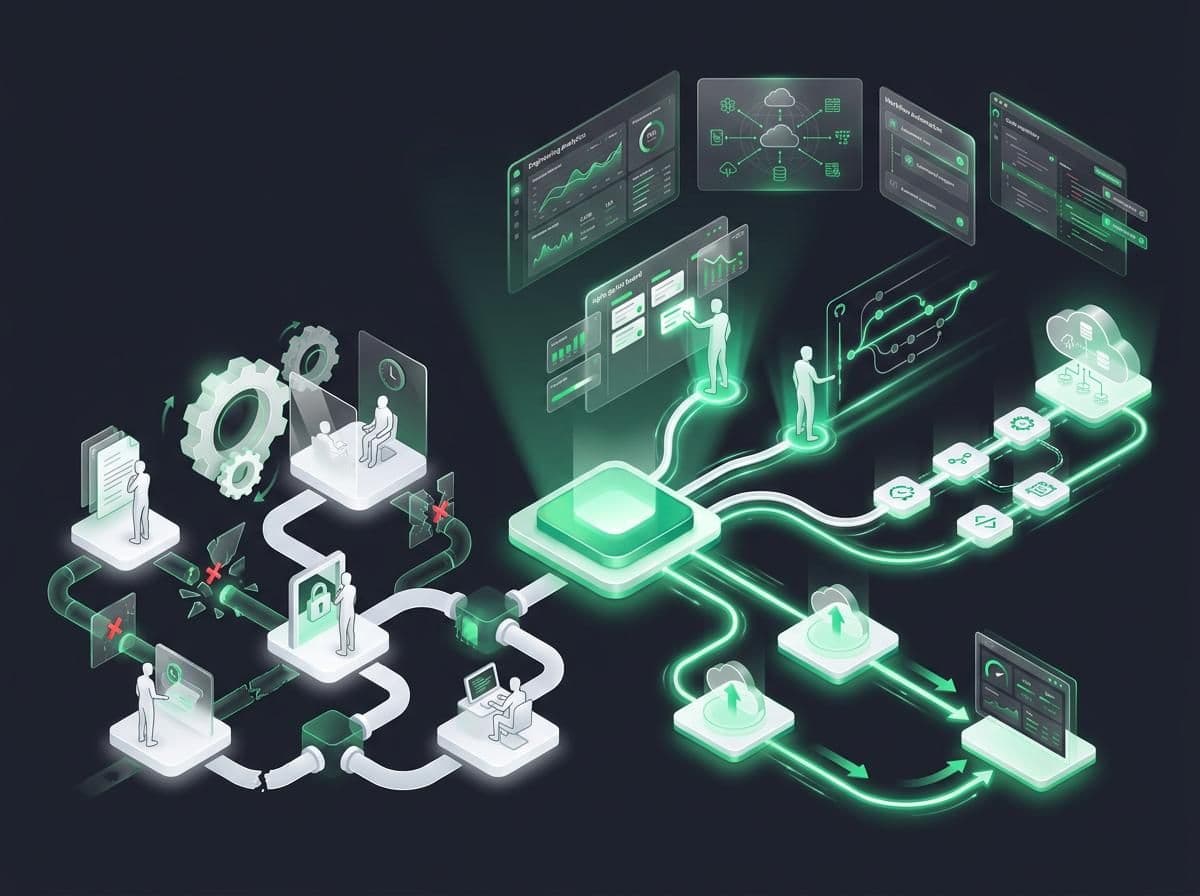
Speed-to-Deploy: Hire IT Talent in 72 Hours
Discover how deploying senior engineers within 72 hours eliminates recruitment lag, protects sprint velocity, and gives tech leaders a decisive competitive advantage.
April 12, 2026
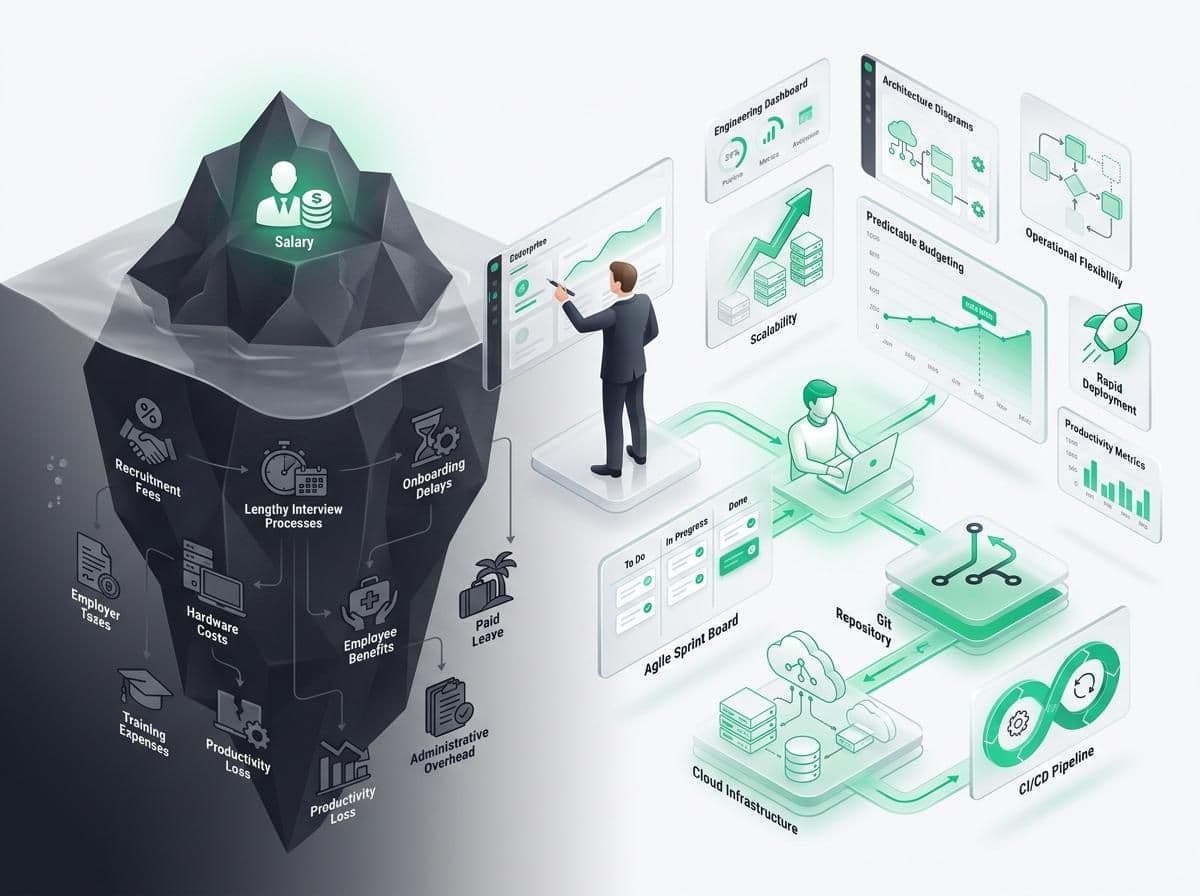
Why Traditional IT Recruitment Is More Expensive Than It Looks
An eye-opening financial breakdown showing CEOs and CFOs why traditional IT recruitment costs far more than base salaries and how staff augmentation eliminates hidden hiring overhead.
April 12, 2026
IT Sourcing in Central Europe: The Nearshore Advantage
Learn why European tech leaders are replacing offshore vendors with CEE nearshore staff augmentation for zero time-zone friction and maximum cost efficiency.