

IT Sourcing in Central Europe: The Nearshore Advantage
Learn why European tech leaders are replacing offshore vendors with CEE nearshore staff augmentation for zero time-zone friction and maximum cost efficiency.
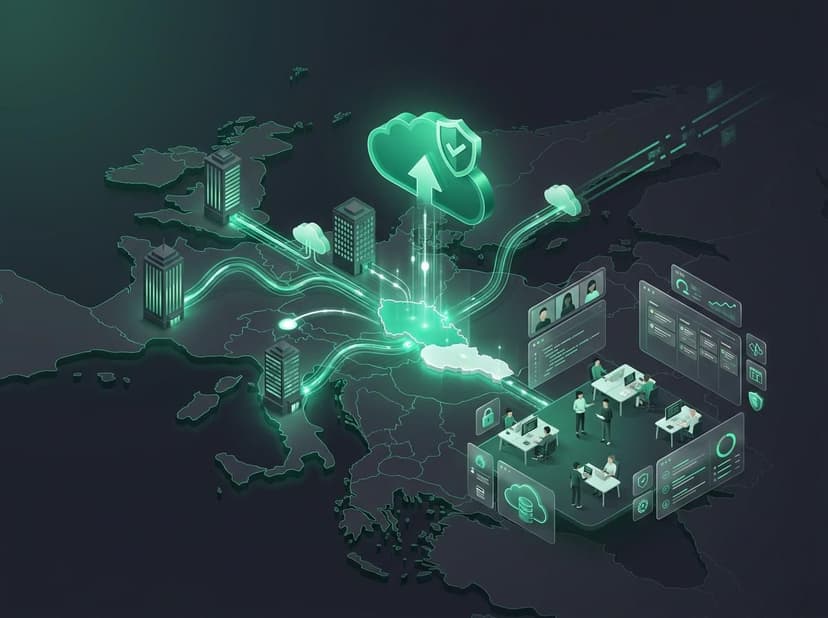
When tech leaders look to optimize their engineering budgets and bridge localized talent shortages, outsourcing is always on the table. However, the traditional "offshore" model of sending development work to regions with an 8-to-10-hour time difference often introduces hidden coordination overhead. Weeks are lost waiting for basic email replies, communication misunderstandings lead to buggy feature deployments, and management burnouts spike.
This is why modern technology enterprises are abandoning deep offshore models in favor of CEE Nearshore Staff Augmentation. Sourcing your engineering muscle from Central Europe provides an optimal balance of cost efficiency, exceptional technical capability, and zero operational friction.
1. The Operational Trifecta: Time-Zone, Culture, and Language
Successful software development relies entirely on real-time collaboration and clear communication. Nearshoring to Central European countries like Slovakia offers distinct operational advantages over offshore models.
Real-Time Overlapping Work Hours
With offshore destinations like India or Southeast Asia, your internal team is logging off just as the external team is logging on. This creates a painful 24-hour feedback delay for minor blocking issues. With a CEE nearshore partner, your teams share the exact same working hours. External developers participate in your live morning standups, respond instantly to Slack pings, and pair-program in real-time with your internal staff.
Cultural and Communicative Alignment
Engineers in Central Europe are educated within Western-aligned systems that encourage critical thinking, proactive problem-solving, and direct communication. A CEE developer will not simply nod their head and build a flawed requirement specification; they will actively speak up, ask architectural questions, point out edge cases, and collaborate with your tech lead to find a better technical approach.
2. The Strategic Sourcing Matrix
- Talent Availability: Offshore Sourcing (e.g., SE Asia) is High quantity, variable quality; Local Hiring (e.g., Germany / UK) is Extremely scarce / High competition; Nearshore CEE Sourcing (e.g., Slovakia) is High quantity of top-tier engineers.
- Time-Zone Overlap: Offshore Sourcing (e.g., SE Asia) is Minimal (10% - 20%); Local Hiring (e.g., Germany / UK) is 100%; Nearshore CEE Sourcing (e.g., Slovakia) is 100% (Same or +/- 1 hour).
- Legal Compliance: Offshore Sourcing (e.g., SE Asia) is Complex (Non-EU laws, IP risks); Local Hiring (e.g., Germany / UK) is Straightforward (High domestic tax); Nearshore CEE Sourcing (e.g., Slovakia) is Seamless (EU Member States, GDPR, IP protection).
- English Proficiency: Offshore Sourcing (e.g., SE Asia) is High variability (Silos common); Local Hiring (e.g., Germany / UK) is Fluent / Native; Nearshore CEE Sourcing (e.g., Slovakia) is Excellent (Business & Tech fluent standard).
- Cost Efficiency: Offshore Sourcing (e.g., SE Asia) is High (but offset by management drag); Local Hiring (e.g., Germany / UK) is Low (Extremely expensive overhead); Nearshore CEE Sourcing (e.g., Slovakia) is Optimal (Highly competitive total cost of delivery).
3. High-Tier Technical Education Standards
The CEE region, particularly Slovakia and the Czech Republic, boasts a deep, historic emphasis on STEM education and technical universities. Graduates enter the workforce with robust foundations in computer science, system architecture, data structures, and advanced mathematics. This enables nearshore developers to quickly master complex enterprise ecosystems, heavy backend architectures (Java, .NET, Go), data engineering pipelines, and specialized cloud infrastructure management.
Conclusion: Maximizing Total Cost of Delivery
When evaluating outsourcing, smart tech leaders calculate the Total Cost of Delivery, not just the nominal hourly invoice rate. If a developer with a lower hourly rate takes three times longer to build a feature or requires double the management overhead, they are ultimately the more expensive option.
Nearshore IT staff augmentation from Central Europe delivers elite engineering talent wrapped in a frictionless, highly secure, and fully aligned package, giving your enterprise a powerful competitive edge.
Operating from the heart of Central Europe, Logamic provides western enterprises with premium, English-fluent tech talent within their exact time zone. Experience zero-friction development scaling today—contact us for a consultation.
Related articles
April 12, 2026
The CTO’s Guide to IT Sourcing Models
A practical guide for CTOs comparing In-House Hiring, Agencies, and IT Staff Augmentation to help engineering leaders choose the best model for scaling their tech teams efficiently.

April 12, 2026
Speed-to-Deploy: Hire IT Talent in 72 Hours
Discover how deploying senior engineers within 72 hours eliminates recruitment lag, protects sprint velocity, and gives tech leaders a decisive competitive advantage.
April 12, 2026
Why Traditional IT Recruitment Is More Expensive Than It Looks
An eye-opening financial breakdown showing CEOs and CFOs why traditional IT recruitment costs far more than base salaries and how staff augmentation eliminates hidden hiring overhead.